
BUET Team Successfully Tapes Out 100% Open-Source 32-bit RISC-V Processor
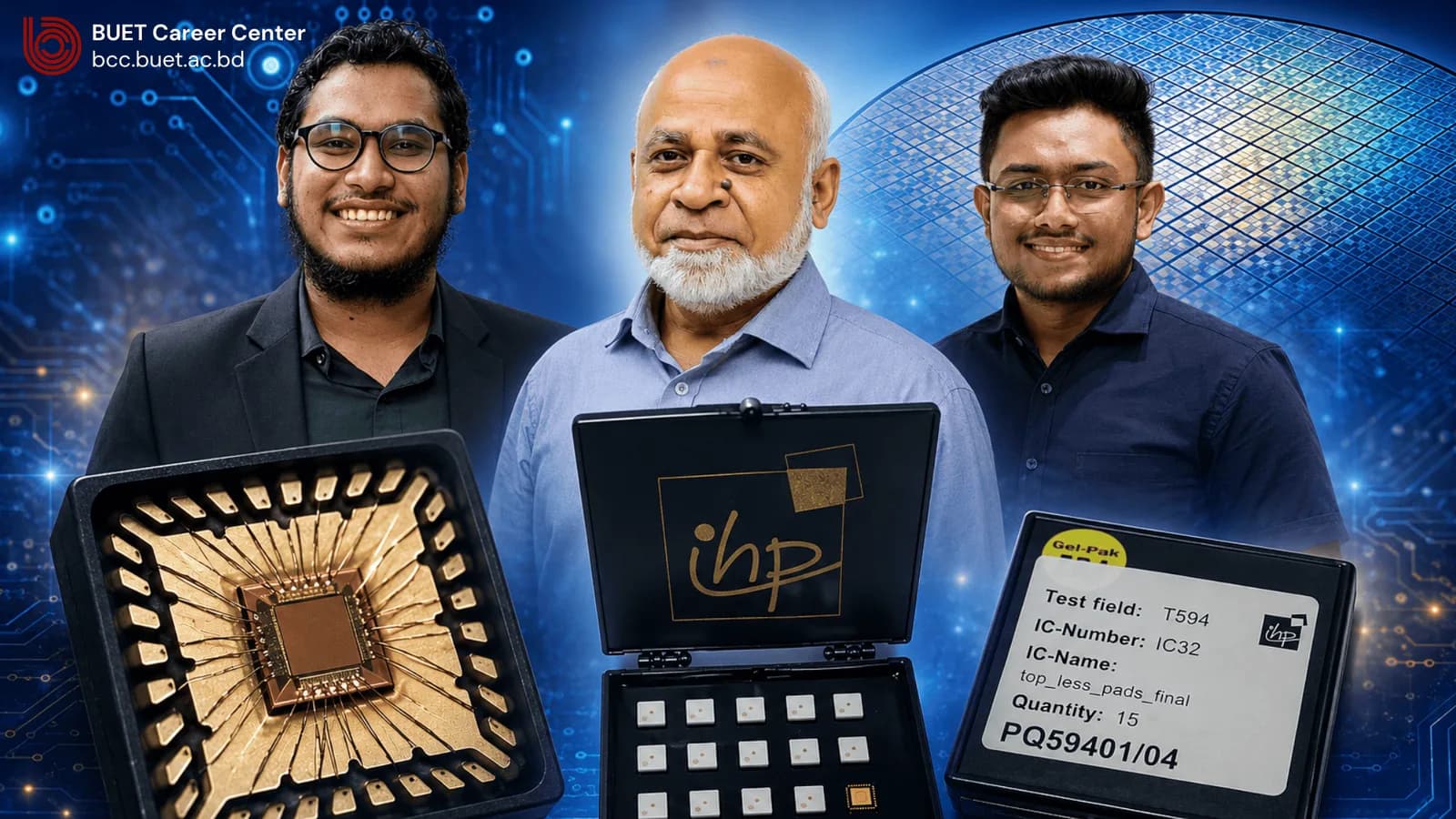
A research team from the Department of Electrical and Electronic Engineering (EEE), Bangladesh University of Engineering and Technology (BUET), has successfully completed the design and fabrication of a 32-bit RISC-V PicoRV32I processor using a completely open-source hardware development flow. The project was led by Professor ABM Harun-ur Rashid and carried out with the dedicated efforts of undergraduate students Md. Khalid Hossain and Sheikh Tariful Islam.
The processor is based on the RISC-V Instruction Set Architecture (ISA) and was developed using an entirely open-source Electronic Design Automation (EDA) toolchain. The team completed the full hardware design workflow, including RTL design, functional verification, synthesis, and physical implementation, using the IHP SG13G2 130 nm open-source Process Design Kit (PDK).
As part of its support for open-source semiconductor research, IHP – Leibniz Institute for High Performance Microelectronics, Germany, fabricated the chip free of charge. After completing the necessary customs and import procedures, the fabricated chip has now arrived at BUET.
The chip will undergo testing with technical support from iTest Bangladesh Limited, utilizing the advanced testing facilities of iTEST, Inc. in San Jose, California. Following successful validation, the team aims to integrate the processor into consumer electronic products manufactured by Bangladeshi electronics companies.
The project also received technical support from Neural Semiconductor Limited (NSL), which collaborated closely with the research team throughout the development process and provided research fellowships to the undergraduate students involved.
According to Professor Harun-ur Rashid, this achievement represents an important milestone toward building an indigenous semiconductor ecosystem in Bangladesh. By relying entirely on open-source EDA tools, open-source PDKs, and accessible fabrication opportunities, the project demonstrates that advanced chip design can be pursued without the significant financial barriers traditionally associated with commercial semiconductor development.
The successful tape-out showcases the growing research capabilities of BUET's students and faculty while highlighting the potential of open-source hardware in expanding semiconductor education and innovation. It also reflects the value of collaboration between academia, industry, and international research institutions in advancing high-impact engineering research.
This accomplishment marks an encouraging step toward strengthening Bangladesh's semiconductor research landscape and supporting the long-term vision of developing locally designed integrated circuits for future electronic products.
Source: Original announcement by Professor ABM Harun-ur Rashid on Facebook.